
The sale process for IntelliSmart Infrastructure, which operates smart electricity metering systems of utilities, has drawn strong interest from global infrastructure investors and domestic smart meter manufacturers, people familiar with the matter said.
The company, owned by India’s sovereign wealth fund National Investment and Infrastructure Fund (NIIF) and financially stressed Energy Efficiency Services Ltd (EESL), has received around 10 bids and four-five bidders are expected to be shortlisted for due diligence within a week, the people said.
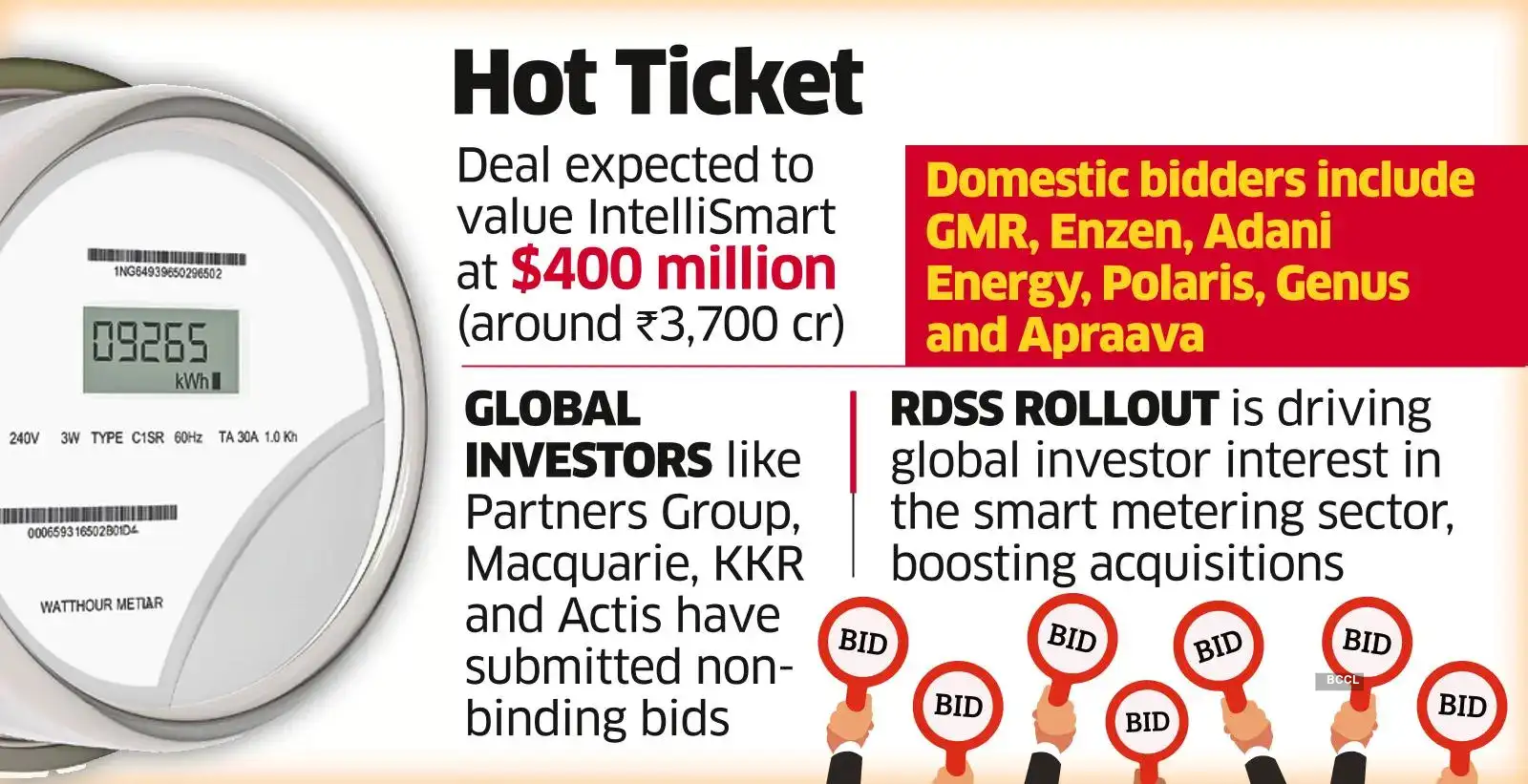
The transaction is expected to value IntelliSmart at an equity valuation of $400 million (around ₹3,700 crore), they added.
Global investors such as Partners Group, Macquarie, KKR and Actis have submitted non-binding bids. Domestic strategic players including GMR Smart Electricity Distribution, Greater Pacific Capital-backed Enzen Global Solutions, Adani Energy Solutions, I Squared Capital-owned Polaris Smart Metering, GIC-backed Genus Power and Apraava Energy have also participated in the process.
Deloitte is running the sale process.
Macquarie and Partners Group spokespersons declined to comment, while queries sent to NIIF, KKR, Adani Group, Actis, Apraava Energy, Polaris and Genus did not elicit any response till press time Tuesday.
IntelliSmart, set up in 2019, has secured orders for around 22 million smart meters from various state utilities. Of these, it has installed around 600,000 meters in Assam and about half a million in Uttar Pradesh. NIIF owns a 51% stake in IntelliSmart, while EESL holds the rest.
EESL, backed by public sector undertakings NTPC, Power Finance Corporation, Rural Electrification Corporation and Power Grid Corporation of India, had total outstanding long-term borrowings of ₹6,045 crore as of March 31, 2025, compared with ₹7,070 crore a year earlier, reflecting a gradual reduction but still elevated leverage levels. Its debt burden is understood to have prompted the proposed divestment of IntelliSmart.
The sale process comes amid the government’s ambitious rollout of the Revamped Distribution Sector Scheme (RDSS), which aims to install 250 million prepaid smart meters by 2027 to reduce aggregate technical and commercial losses. The programme is backed by an estimated investment of ₹1.35 lakh crore, with implementation expected to extend through 2035.
Under the scheme, smart metering works have been sanctioned for 45 distribution utilities in 28 states/ union territories. Till January 15, 40.5 million smart meters have been installed under the RDSS.
With the RDSS rollout gathering pace, global investors have intensified their focus on Indian smart meter manufacturing, strengthening their footprint via acquisitions.
Greater Pacific Capital invested $100 million in Enzen Global Solutions, a knowledge practitioner in the energy and utilities sector. Enzen has a subsidiary named ZenMeter Solutions, which manufactures advanced smart meters.
UK-based Actis had formed a JV last year with EDF India to operate a dedicated platform for concessions as an advanced metering infrastructure service provider.
In 2023, Singapore’s GIC had partnered with Genus Power Infrastructures, to establish the $2 billion platform for financing and developing Advanced Metering Infrastructure Service Provider (AMISP) concessions. GIC holds a 74% stake in this platform, while Genus holds 26%.
As of 2024, the Central Electricity Authority has identified about 45 firms as manufacturers or providers of smart electricity meters in India.
Major power producers also operate smart meter subsidiaries to tap the multi-billion market.
GMR Smart Electricity Distribution is executing a project to replace 7.6 million conventional meters with smart meters for distribution companies in Uttar Pradesh.
A subsidiary of Apraava Energy, Apraava Smart Meter, has secured a contract with Assam Power Distribution Company for installing 690,000 prepaid smart meters. Apraava Kutch Saurashtra Smart Meter, another subsidiary of Apraava Energy, is setting up smart meters in Gujarat.
Smart Meter penetration in India at 5-6% lagged behind developed nations like Japan (100%) and the US (73%), as well as the global average of 43%, highlighting an urgent need to bridge this gap and enhance energy efficiency, Care Edge said in a report last year. According to it, the plan to install 250 million smart meters over five years presented a $20-25 billion opportunity in the energy sector.
The power ministry, meanwhile, has extended the target completion date for installing 250 million smart meters by two years to March 2028.
Source: Economic Times